What to Expect When Hiring a Licensed Asphalt Contractor in Charlottesville, VA: A 2026 Guide
Hiring an asphalt contractor in Charlottesville, VA, is a bigger decision than most homeowners realize. Knowing what to expect from start to finish can save time, money, and stress. This guide walks through every stage, from your first free estimate to the day your pavement is ready for full traffic.
Getting Your Free Estimate Right
A reputable asphalt contractor offers a no-obligation, on-site estimate before any work begins. Contractors who quote over the phone without seeing your property often miss drainage issues, base conditions, or access challenges that affect the final result.
During the estimate, expect the crew to measure the area, check the existing base, and look for signs of subsurface problems. Charlottesville's hot summers, cold winters, and freeze-thaw cycles cause cracking and potholes, so an experienced local contractor will factor those stresses into their recommendations. Ask for a written quote that breaks out labor, materials, and scope.
What Does a Site Assessment Actually Cover?
A thorough site assessment covers more than measurements. Trained paving professionals examine grade and slope to ensure water runs off cleanly rather than pooling and eroding the base. Clay soils, drainage problems, rutting, base failure, and oxidation are all common in the Virginia Piedmont, particularly west of downtown Charlottesville and on rural Albemarle County properties.
The assessor should also note invasive tree roots, utility covers needing height adjustments, and areas where the sub-base has shifted. Virginia's PAV classification covers installing asphalt on driveways, parking lots, and courts, and includes manholes, storm drains, water valves, and all necessary excavation and grading. A properly licensed asphalt contractor handles all of that in one scope of work.
Understanding Virginia Contractor Licensing
Virginia recognizes asphalt paving and sealcoating as a specialty trade under its Class A, B, and C contractor licenses. Class A covers larger commercial projects; Class C covers smaller scopes. All PAV license applicants must complete eight hours of pre-license education and pass a PAV technical exam through PSI.
Verify any asphalt contractor's license status through Virginia's Department of Professional and Occupational Regulation (DPOR) before signing anything. Always ask for proof of general liability insurance and workers' compensation coverage. An unlicensed or uninsured crew puts your property and finances at risk if something goes wrong.
Key Questions to Ask Before Hiring
▸ What is your DPOR license class and number?
▸ Are you fully insured with general liability and workers' compensation?
▸ Do you offer a workmanship warranty, and for how long?
▸ Will you handle the project directly or subcontract it?
▸ How do you prepare the base before laying asphalt?
Project Timeline from Quote to Cure
Most residential paving projects in Charlottesville move through a predictable sequence.
Step 1 - On-Site Estimate
The contractor visits, assesses conditions, and provides a written scope and quote.
Step 2 - Scheduling
Most residential driveways are completed in one to three days. Spring through fall is the ideal paving window, though year-round work is possible with proper planning.
Step 3 - Site Preparation
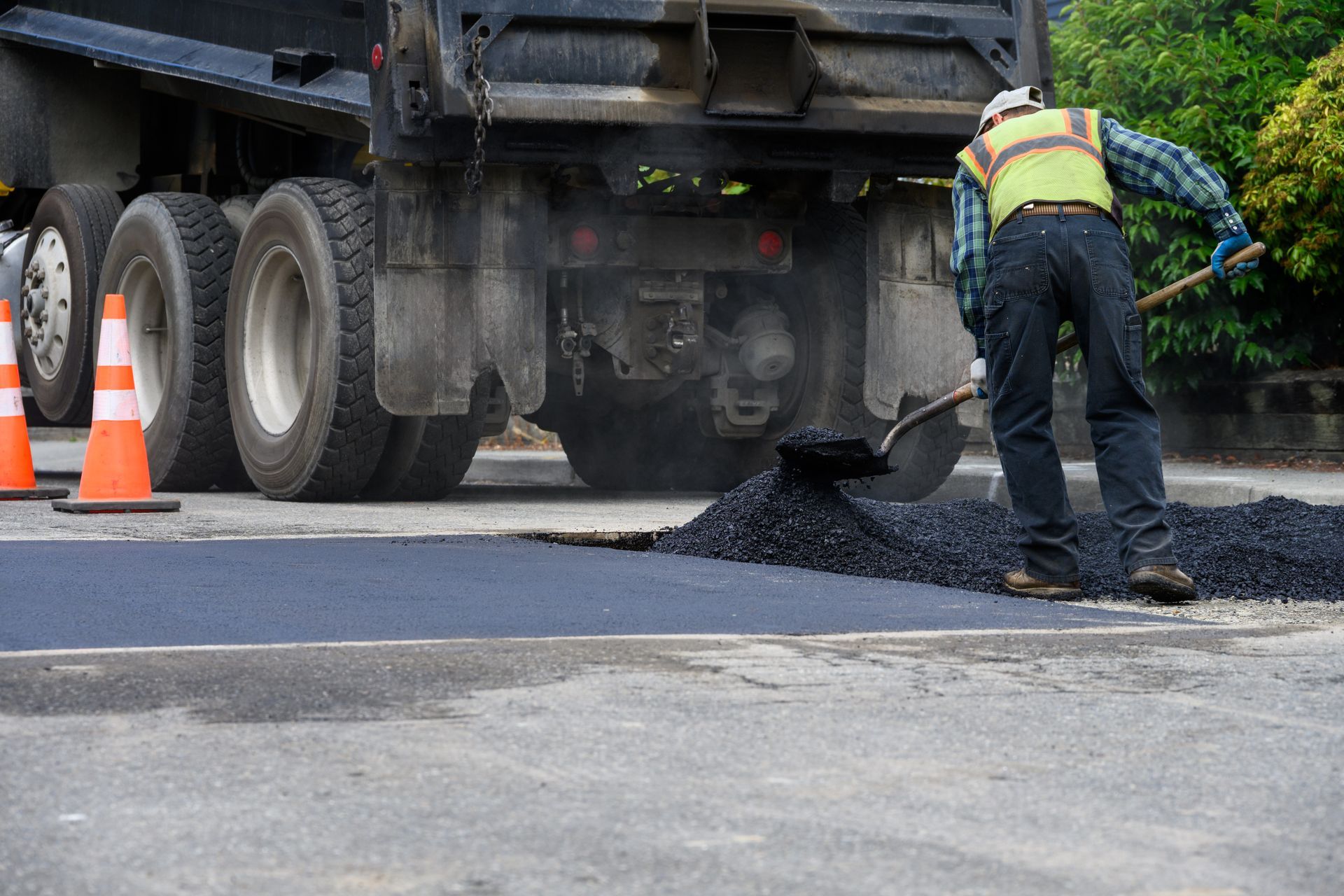
The crew removes old material if needed, grades the surface, and compacts the sub-base. Skipping this step is a common cause of early pavement failure.
Step 4 - Asphalt Installation
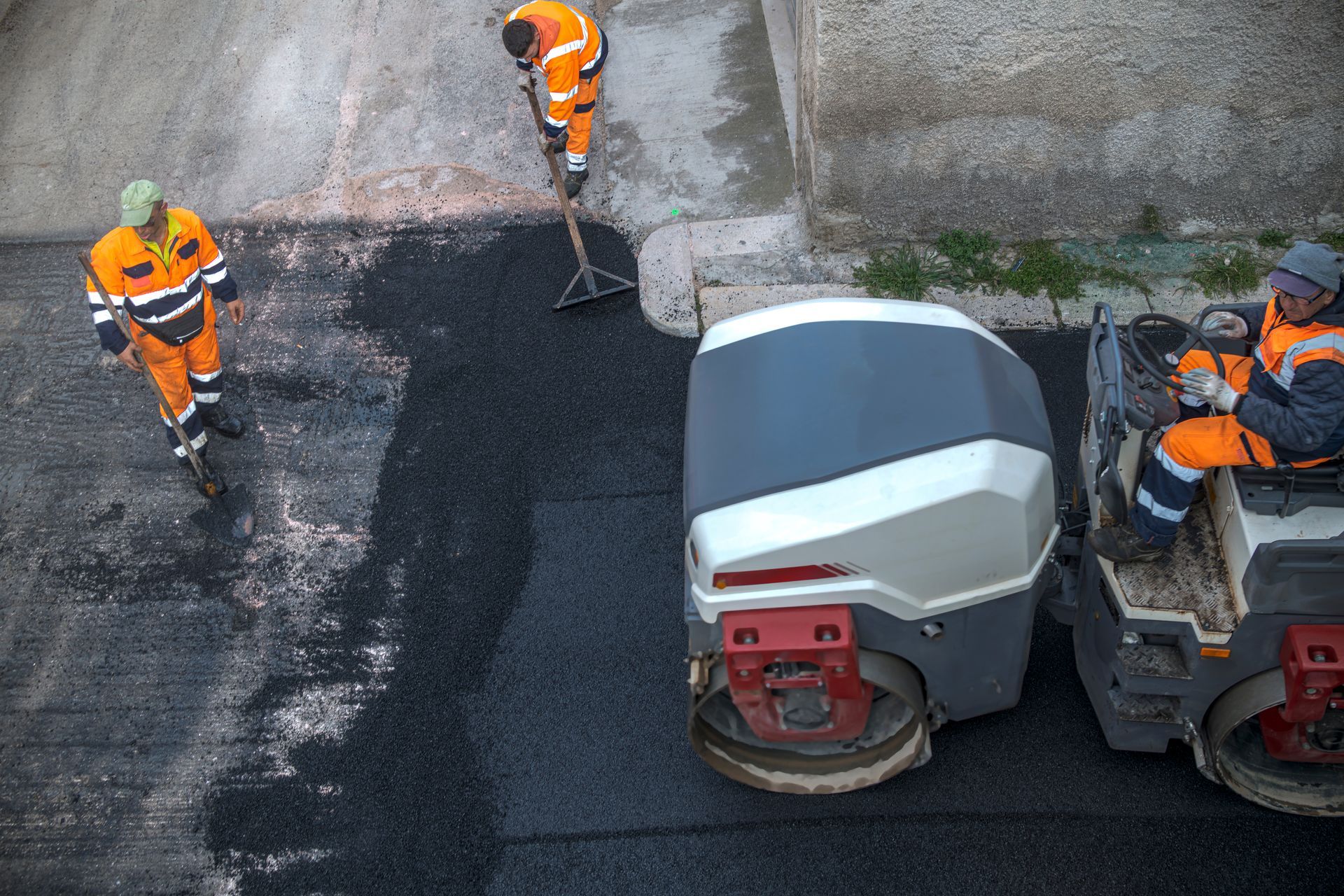
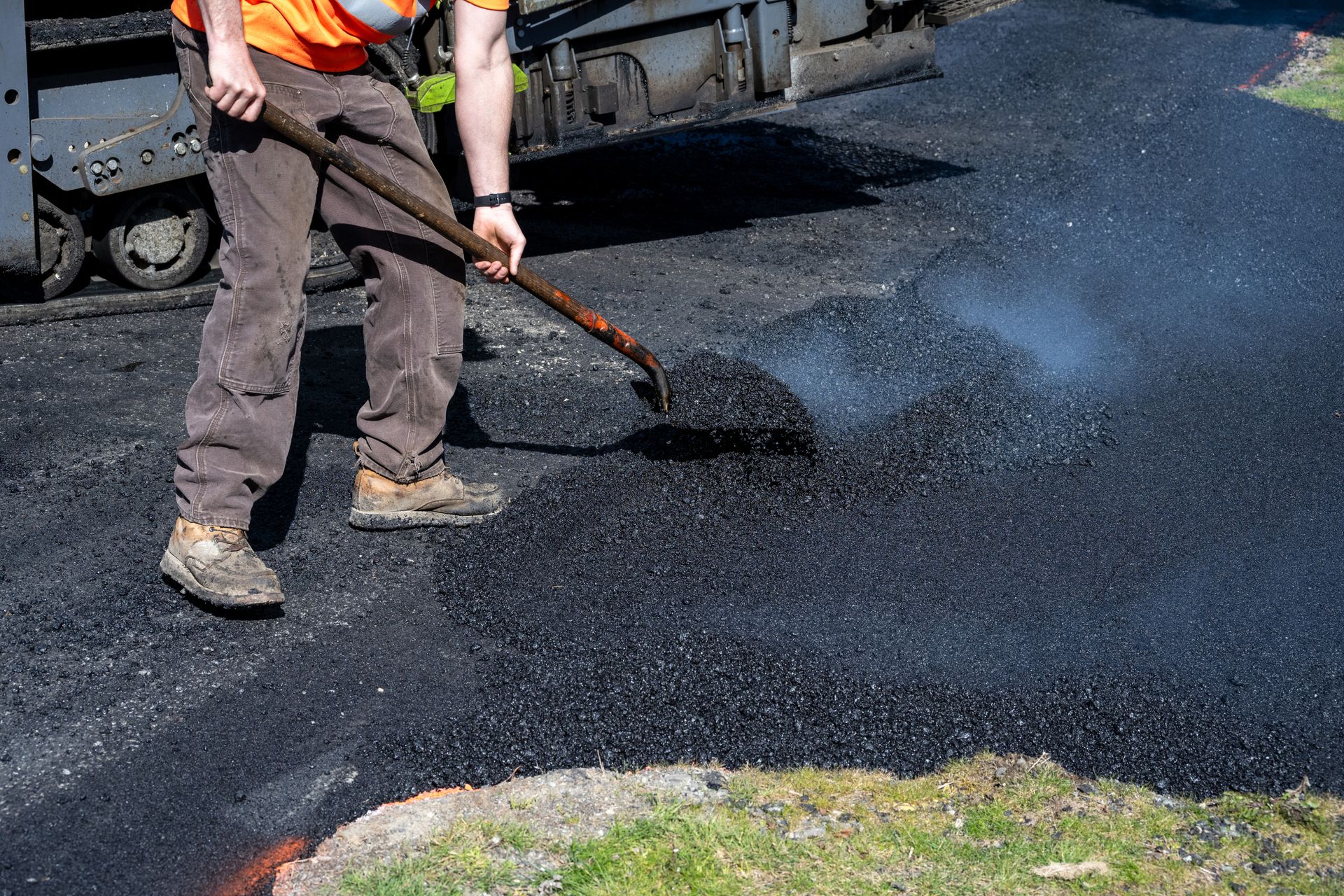
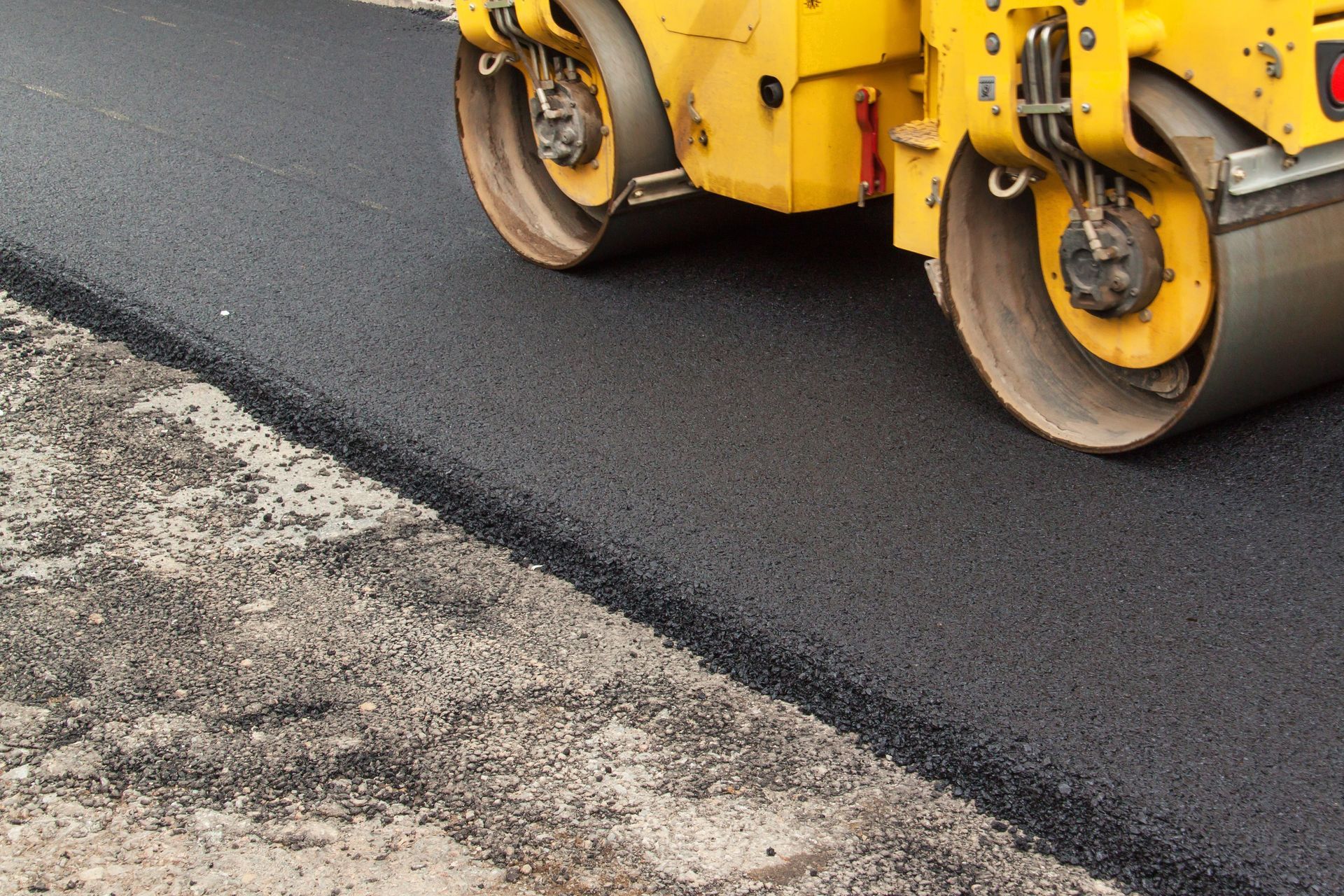
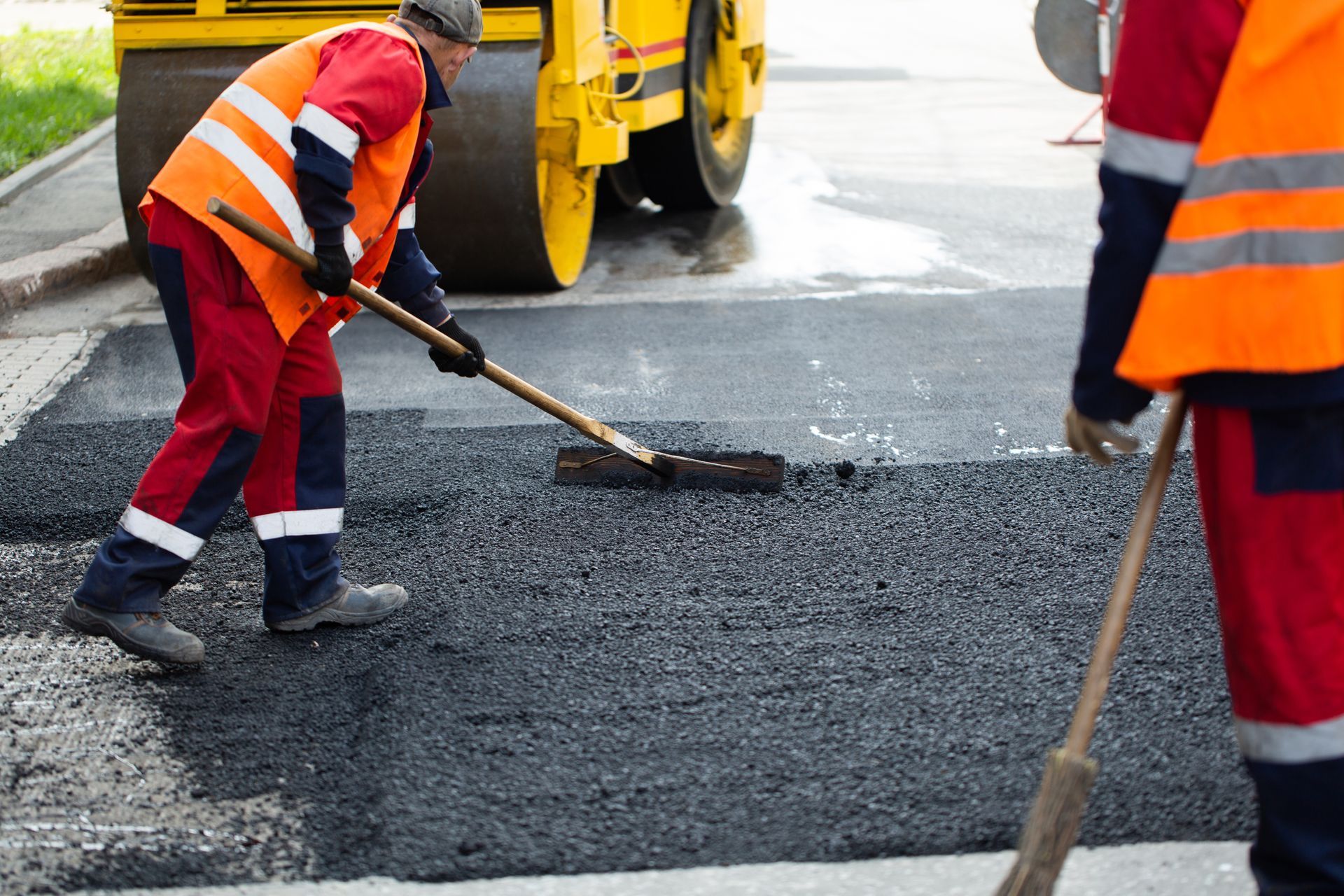
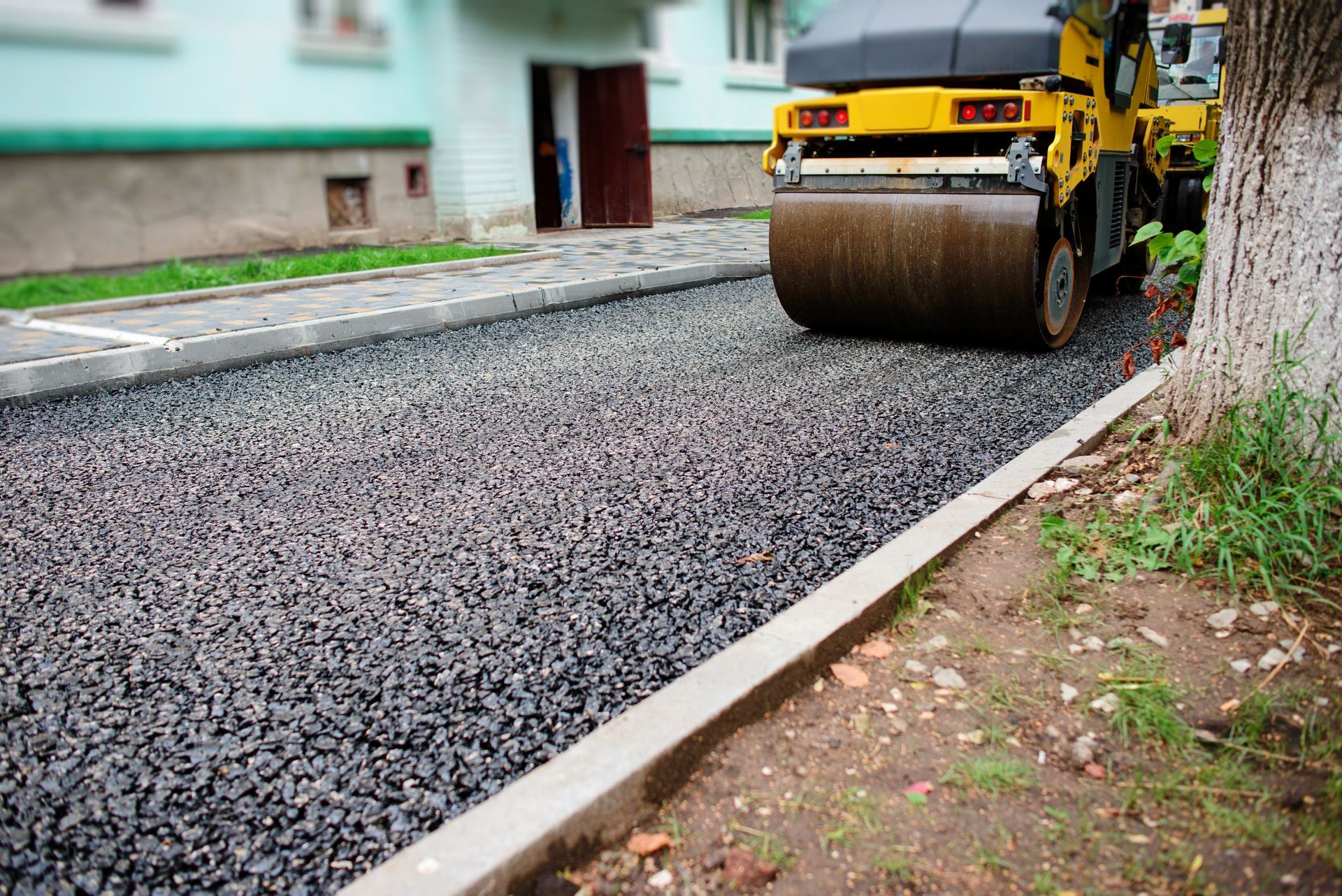
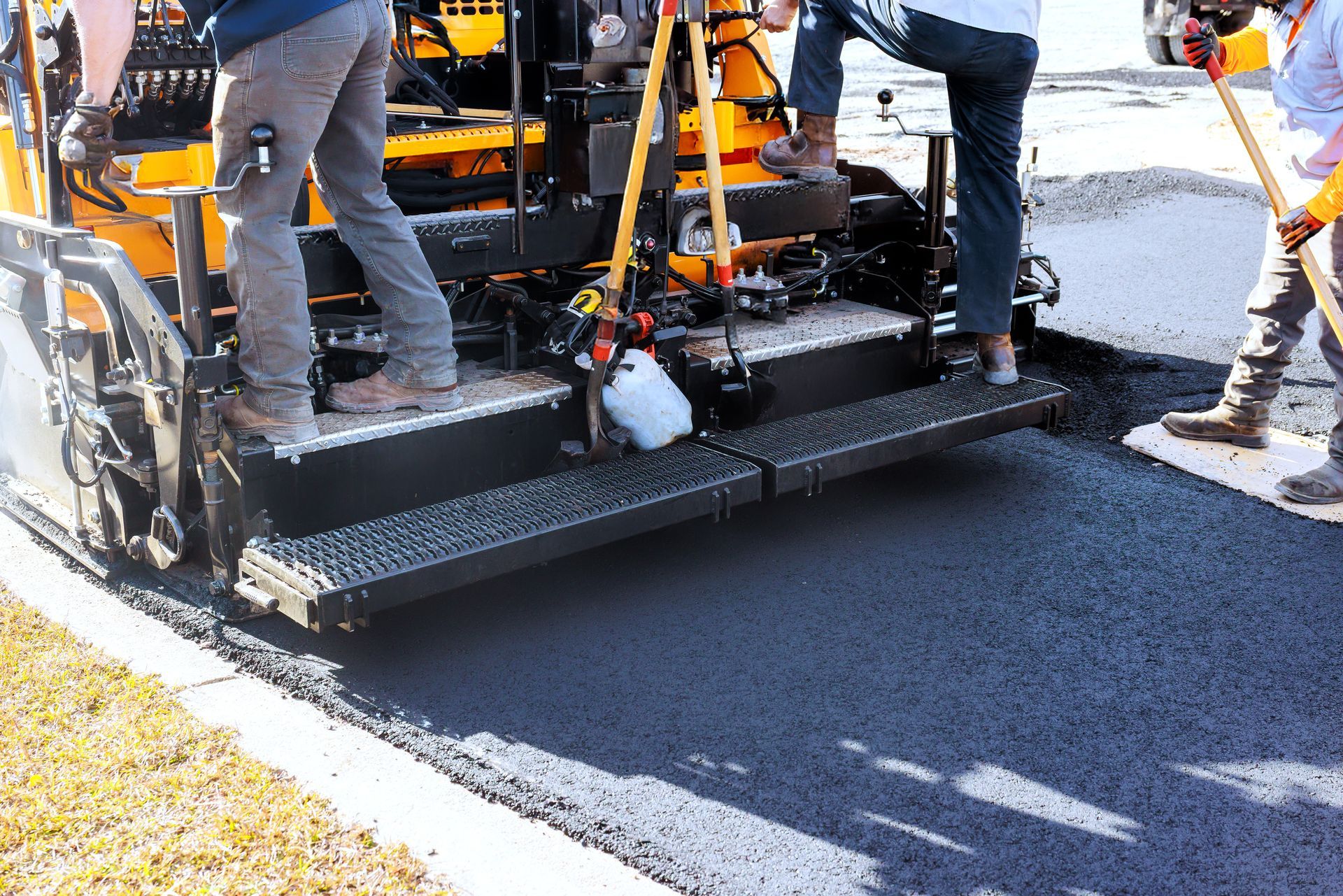
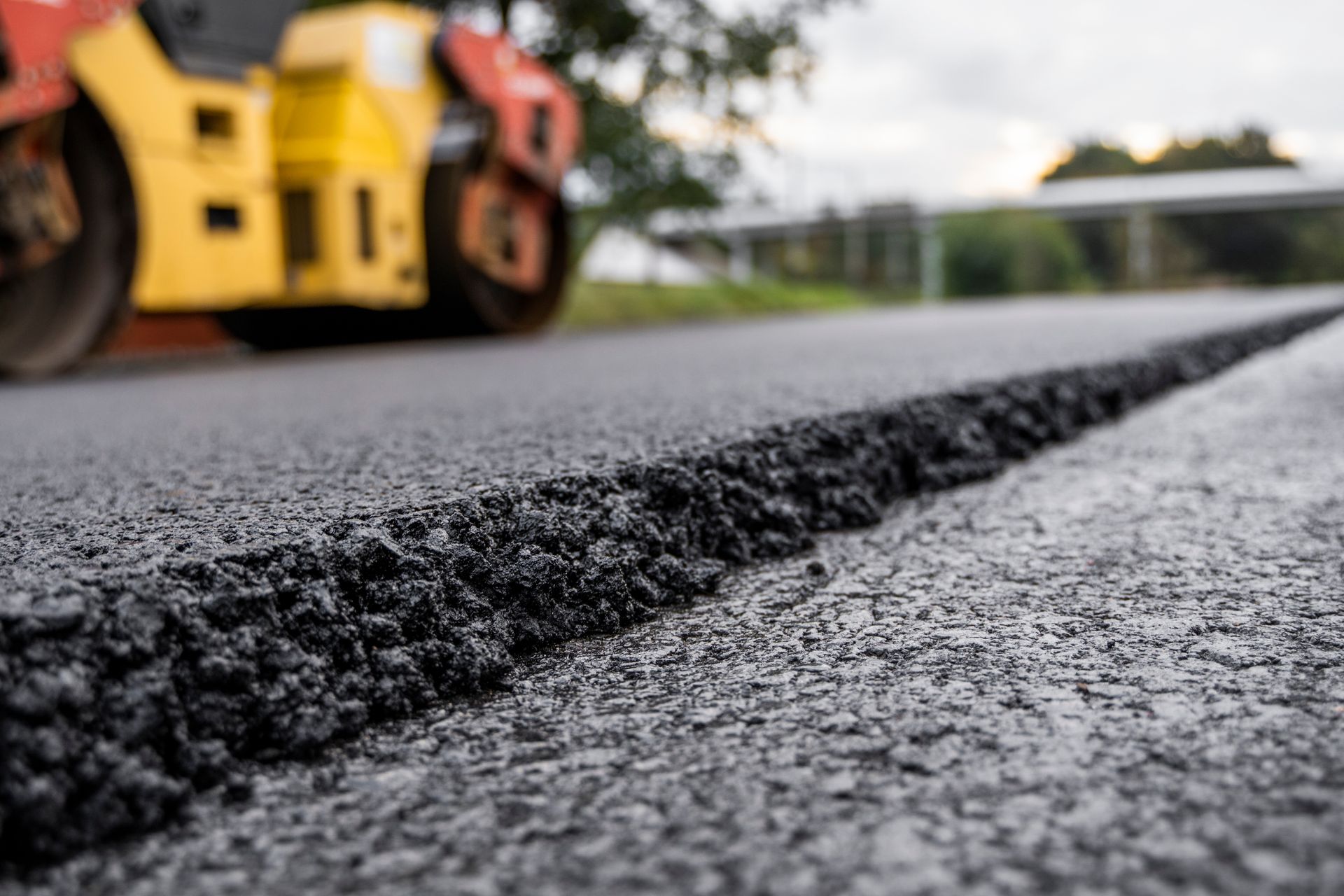
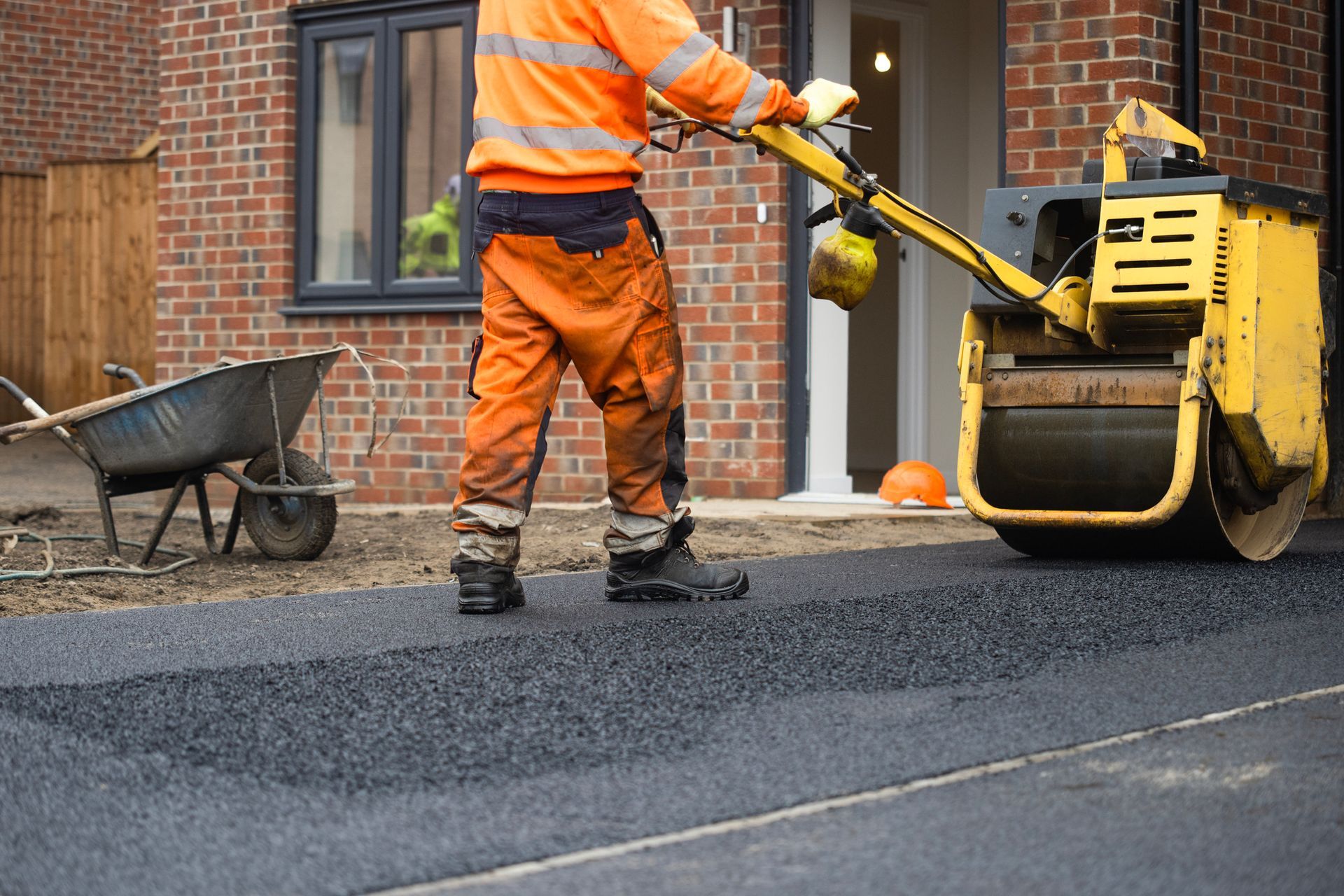
Hot mix asphalt is laid and compacted using paving equipment and rollers. Compaction quality directly affects how long the surface holds up under traffic and temperature swings.
Step 5 - Cure Time
In warm weather, cure time typically runs 24 to 48 hours before allowing heavy traffic. Colder temperatures extend this period. Your contractor should give a specific recommendation based on the season and mix used.
Red Flags to Watch Out For
These warning signs can indicate a low-quality or unreliable operation.
▸ Demanding full payment upfront before any work begins.
▸ Offering quotes so low they cannot cover quality materials and proper labor.
▸ Refusing to provide proof of insurance or a DPOR license number.
▸ Quoting over the phone without visiting the site.
▸ Pressuring you to sign immediately with a "today only" deal.
▸ Providing no workmanship warranty or written contract.
Many homeowners make the mistake of hiring out-of-area asphalt contractors unfamiliar with Charlottesville's climate. Local knowledge of freeze-thaw patterns, Albemarle County soil types, and seasonal paving windows matters more than most buyers realize.
Your Next Step Toward Durable Pavement
Check licensing through DPOR, confirm insurance, ask for a written warranty, and make sure the crew performs a real site assessment before quoting. A paving project done correctly can last many years with routine sealcoating and minor repairs.
Pyramid Paving LLC serves the Charlottesville area with residential and commercial paving, milling, sealcoating, and repair. The team combines local climate knowledge with licensed, insured service to deliver surfaces built to handle Virginia's seasons. To schedule your free on-site estimate, visit the contact page or explore residential paving services to learn more. Call (434) 906-5708 to get started today.
Find Pyramid Paving LLC on Google and read reviews from local customers:
Pyramid Paving LLC.